
How 2026 Wearables Predict Illness 48 Hours Before Symptoms Appear
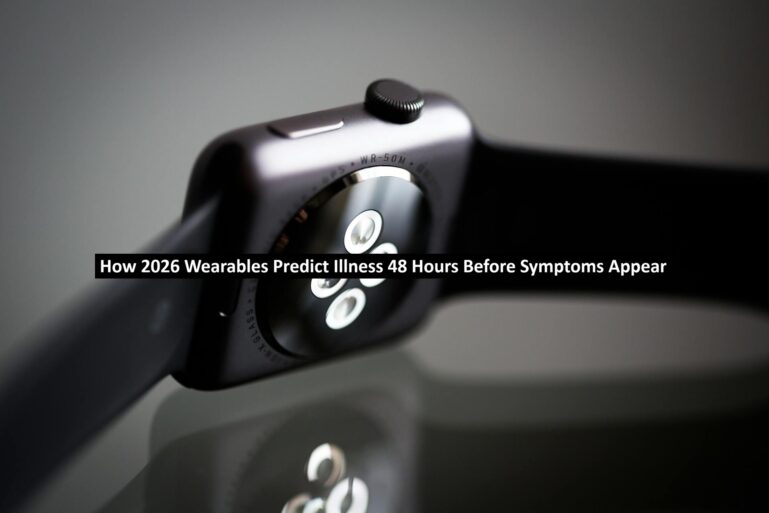
Health technology has seen huge advancements over the past few decades and there is seemingly no end in sight for the improvements. It’s always been the case that as soon as you start to feel symptoms of an illness, you get seen by a professional who can appropriately diagnose you and provide you with whatever you need to get better. However, there’s now wearable technology that can track vital health metrics and detect illnesses 48 hours before you start to get symptoms.
These gadgets have revolutionised healthcare, as it has the potential to get quicker solutions to health issues. They are designed with sophisticated algorithms that can detect early warning signs of various health conditions before they become a problem. While still being developed, it is hoped that they can save the industry a lot of money and provide customers with greatly improved care.
This guide will explore these in more detail, so continue reading to find out more about the new wearable technology that is making such an impact in the healthcare industry and how it can be a fresh start for your mind.
What Health Metrics are Monitored by Wearables?
While most wrist wearables are primarily used to count steps and give you advice about physical activity, these new wearable devices can track resting heart rate and give you insights into your cardiovascular health and fitness levels. It can also monitor stress levels, as your heart rate variability will notify you if you recover well from a stressful event that will significantly boost your heart rate. The advanced models are also expected to perform electrocardiograms to spot any potential breathing problems.
Sleep tracking is also a big thing for wearable devices, as they can measure how long you sleep for and the length of time that you’re in REM and non-REM stages. It can then look at the data to give you a breakdown of results that can be used to analyse your brain function and physical recovery.
Read: How IIoT Technology is Transforming Maintenance and Asset Management
How AI and Data Analytics Help with Early Detection
Wearable health technology is powered by AI systems that look at your body’s data to detect health problems before any symptoms are visible. They can find any anomalies in your health patterns, such as a change in heart rhythm that could indicate that there’s a problem that needs addressing. It can also predict potential health issues by detecting changes in your body’s signals through predictive analysis.
Some of the results that these wearables have found include:
- Acute kidney injury prediction 48 hours before symptoms with 90% accuracy in severe cases.
- Detection of seizures with 78.2% accuracy by analysing heart rate patterns
- 100% accuracy of identifying dangerous falls using logistic regression.
This allows you to become aware that you need to go see a doctor, who can identify and treat developing health problems before they become serious.
Real-Life Health Detection
COVID-19
Studies using wearable devices have demonstrated the ability to detect COVID-19 infections before symptom onset. Researchers at Stanford Medicine found that in some cases, wearable devices detected physiological changes, such as elevated heart rate, as early as nine or more days before the wearer experienced symptoms.
Fever Detection
The Oura Ring has been specifically highlighted in research for its ability to track continuous skin temperature, rather than just spot-checking. A study using the Oura Ring found it could detect early signs of fever in 93% of cases, averaging three days before symptoms became noticeable. One user showed high-level symptoms 24 hours before they experienced chest pains, which were later diagnosed as inflammatory pancreatitis.
Cardiac Event Prediction
Research has highlighted next-gen wearables that use AI to monitor heart rhythms, oxygen levels and stress signals to predict serious cardiac events up to 48 hours ahead with 90% accuracy in severe cases. Apple Watches have been shown to detect AFib with 84% accuracy, often identifying asymptomatic episodes before a major stroke occurs.
Limitations and Challenges of Wearable Tech
While the start of this technology has been promising, there are still major challenges that it needs to face to become able to be used successfully in a medical sense. The devices currently struggle with accuracy problems, as they can get diagnosis right all the time. Motion and signal interference lead to inaccurate readings in a lot of wearables, so you shouldn’t depend on them for complete diagnosis of an illness. Tattoos can also mess up readings in some cases.
Final Thoughts
While they do still face some challenges, wearable technology has huge potential in detecting illnesses in people before they develop systems. This can help them get treatment for serious conditions before they become real problems.
However, it’s important to use this with care, especially if you’re a healthcare professional recommending this to your patients for diagnosis help. If someone thinks they aren’t ill because the technology hasn’t told them so, but then they end up with a personal injury to their cardiovascular health they could claim compensation from personal injury solicitors against the healthcare professional.
